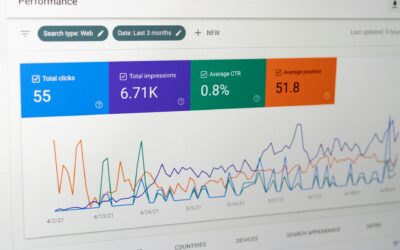

The advice is always the same. Post more. Be consistent. Show up daily. Feed the algorithm and it will feed you back. So the business commits, and for six months somebody produces content four times a week, and the follower count creeps upward, and the engagement is respectable, and at the end of it nobody can point to a single client who came from any of it. The conclusion drawn is usually that they need to post better. The more likely explanation is that posting volume was never the variable that mattered, and that the extra activity was quietly working against them the entire time.
Why More Posting Makes It Worse
This is the part that sounds like a contradiction and is not. For a premium service business, increasing output frequently damages the thing social media is meant to build.
The mechanism is straightforward. Producing content four times a week means producing a great deal of content with nothing much to say, because nobody has four substantial ideas a week. So the filler arrives. Reposted quotes, industry news with a short comment attached, team photos, a carousel of generic tips. None of it is harmful in isolation. Collectively it teaches your audience that your content is not worth stopping for, which is the exact opposite of what a premium brand needs.
There is a second cost. Content produced under volume pressure gets written for the algorithm rather than for a person, and it shows. Premium buyers are unusually good at detecting when something was made to be seen rather than to be useful. Once they have made that judgement, they stop reading closely, and the occasional genuinely good piece gets filtered out along with everything else.
Less, with more behind it, outperforms more with less behind it. It is not a nice idea. In this category it is simply how the numbers work.
What Social Media Actually Does for a High-Value Service
Set aside the metrics for a moment and consider what role this channel can realistically play.
It will not close a sale. Nobody commits a significant amount of money to a service because of a post. That expectation is the source of most disappointment in this area.
What it does do, when handled properly, is provide ongoing evidence. Your prospect is in a long evaluation period. They found you through a referral or a search, they are not ready to act, and they are quietly watching to see whether your thinking holds up over time. Your social presence is where that watching happens.
It also functions as verification. Someone receives a recommendation, looks you up, and forms an impression in about ninety seconds based on what they find. That impression is set by the quality and currency of what is there, not by how much of it there is.
And it reaches the people around your buyer. Advisors, peers, adjacent service providers, the people who make introductions. In a market the size of Tasmania, that secondary audience is often more commercially valuable than your direct one.
Did You Know? For considered service purchases, a substantial share of social media’s commercial contribution comes from people who never engage with a single post. They read, form a view, and act months later through a completely different channel. Any measurement built on engagement will value this contribution at approximately zero.
The Tasmanian Market Changes the Calculation
Running social for a premium service here is not the same as running it in a larger market, and the differences are worth using rather than working around.
The audience is small and largely knowable. You are not trying to reach an anonymous mass. In many categories the number of genuinely relevant businesses or individuals in the state is in the hundreds, which means reach is almost never the constraint and relevance always is.
Everyone can see everything. Your competitors, your prospects, your past clients and your referral partners are all in the same feeds. Content written for one audience is read by all of them, which raises the cost of anything careless and raises the value of anything genuinely thoughtful.
Reputation moves offline quickly. What you publish gets discussed in person more than it gets discussed in comments. The absence of visible engagement is a poor indicator of impact here, because the conversation is happening somewhere you cannot see.
Local credibility compounds unusually well. In a small market, being consistently useful for two years makes you the obvious name in a way that is much harder to achieve in a larger city. The timeline is long and the eventual position is defensible.
The Quiet Audience Problem
There is a specific dynamic in premium social that explains most of the frustration founders feel with it, and once you understand it the whole channel becomes easier to judge.
Your most valuable followers behave like an audience at a talk, not like participants in a conversation. They read. They do not comment, share, or react. Many of them have deliberately configured their accounts so their activity is not visible, because they run businesses in a small market and have no interest in publicly signalling what they are considering.
This produces a genuinely difficult situation. The people most likely to become clients are also the people least likely to generate any visible signal that they exist. Meanwhile the accounts that do engage enthusiastically are frequently peers, students, competitors, and people who enjoy the topic but will never purchase.
If you optimise toward the visible audience, you will steadily shift your content toward what generates reactions, which means broader, lighter, more relatable material. The quiet audience will notice the drift immediately, because the thing they valued was the substance, and they will gradually stop paying attention. Nothing on your dashboard will indicate this has happened. The numbers may well improve.
The only defence is to decide in advance who you are writing for and to accept that you will not receive much feedback from them. Write the piece your best prospect would find useful, publish it, and resist the urge to interpret silence as failure. In this category, silence is the normal condition of an audience that is paying close attention.
The Metrics That Mislead
| Metric | Why It Misleads for Premium Services | What to Watch Instead |
| Follower count | Mostly peers, competitors and unrelated accounts | Whether the right specific people follow you |
| Engagement rate | Rewards broad relatable content over useful content | Quality of the comments you do receive |
| Posting frequency | Measures effort, not effect | Whether each piece was worth publishing |
| Reach | Counts people who cannot buy from you | Reach within your defined segment |
| Link clicks | Premium buyers research separately, often later | Direct enquiries that reference your content |
The single most useful question is one no platform reports. When a new enquiry arrives, does that person already understand how you think? If they do, and they mention something you published, the channel is working regardless of what the dashboard says.
Insider Tip from Sarah: I have a client whose best performing post of the year had eleven likes. It was a direct, slightly uncomfortable piece about something their industry routinely gets wrong. It produced two enquiries within a fortnight, both from people who had been quietly following for over a year and had never once engaged. Meanwhile the post that reached thousands produced nothing at all. If you are optimising for the second kind of result, you will systematically stop making the first kind.
What to Actually Publish
The content that works for premium services is narrower than most people expect, and there is less of it.
A perspective on something specific. Not a summary of industry news. An actual position on how something should be done, ideally one that some people would disagree with. This is the highest value content you can produce, and it is the hardest, which is why so little of it exists.
Evidence of the work. What a project actually involved, what was difficult about it, what you would do differently. Specificity is the entire point. Vague success stories read as promotion and get discounted immediately.
Answers to real questions. The things prospects ask in sales conversations. Each one published is a small piece of friction removed from every future conversation.
Something that disqualifies people. Publishing who your work is not suitable for is counterintuitive and consistently effective. It signals confidence, and it makes the right reader feel precisely identified.
Occasional evidence of a human being. Not a personality performance. Just enough to confirm there is a person behind the business, which matters when the purchase is essentially an investment in someone’s judgement.
A Cadence That Is Actually Sustainable
For most premium service businesses in this market, once or twice a week is sufficient, provided each piece earns its place.
That frequency has a significant secondary benefit. It is achievable alongside client work, which means it survives a busy quarter. Most social media strategies fail not because they were wrong but because they were designed for a level of output the business could never maintain, and the collapse produces a dormant profile, which as a signal is considerably worse than having posted sparingly all along.
Batch the writing. Set aside one session a month, produce four or five pieces, and schedule them. The topics are already sitting in your client conversations, your proposals and the questions you answer repeatedly.
What to Stop Doing Immediately
- Stop posting to fill a schedule. An empty week is better than a week of filler, and nobody is monitoring your consistency except you.
- Stop chasing formats. Whatever the platform is currently favouring will change, and building your presence around it means rebuilding it every eighteen months.
- Stop measuring yourself against high-volume accounts. Businesses with large followings usually sell something different to a different audience, and copying their approach imports a strategy designed for economics you do not share.
- Stop maintaining platforms you do not need. Two done properly beats five done thinly. For most premium service firms in Tasmania, one professional platform plus one visual platform is the entire sensible answer.
- Stop expecting the channel to generate demand on its own. It supports your positioning, your referrals and your search presence. It does not replace them, and businesses that treat it as a standalone acquisition channel are consistently disappointed.
Handling the Comparison Trap
One more thing worth naming, because it derails more premium social strategies than any tactical mistake.
At some point you will look at a competitor with a far larger following and conclude that you are losing. You may well not be. Audience size and revenue quality are only loosely related, and in professional services they are sometimes inversely related, because building a large audience usually requires broadening the message until it appeals to people who cannot afford the work.
The relevant comparison is not follower count. It is whether the right two hundred people in your market know who you are and have a clear, accurate sense of what you do. That is achievable in a state this size within about eighteen months of consistent, substantial publishing, and it is worth considerably more than a following ten times larger made up of people in other markets and other price brackets.
Where This Leaves You
Social media for a premium service in a small market is not a growth engine. It is corroborating evidence, available at all times, for people who are quietly making up their minds about you.
That reframe changes everything about how you approach it. You stop trying to be seen by more people and start trying to be worth reading by the right ones. You publish less and think harder about each piece. You accept that the results will appear somewhere else entirely, months later, in an enquiry from someone who never liked a single thing you posted.
Something to try this month. Cut your posting to once a week and put the time you save into making that one piece genuinely worth someone’s attention. Then look at your enquiries in six months rather than your engagement in six weeks.
If you want to work out what role social media should actually play in your business, book your Revenue System Diagnostic and we will look at where it sits alongside everything else you are doing.